

When It Makes Sense, When to Proceed Carefully, and When to Pause
Replacing windows and doors in winter often raises eyebrows—and for good reason. Cold temperatures introduce real variables that can affect materials, installation methods, and long-term performance.
But here’s the honest truth:
Winter window and door replacement can absolutely be done—including full-frame installs—when temperatures and conditions allow.
The key is knowing where the line is and having a team that respects it.
This guide explains when winter installs work well, when extra care is required, and when waiting briefly can protect your investment.
TL;DR (For Homeowners Who Want the Bottom Line)
-
Winter installations are safe and effective above certain temperatures
-
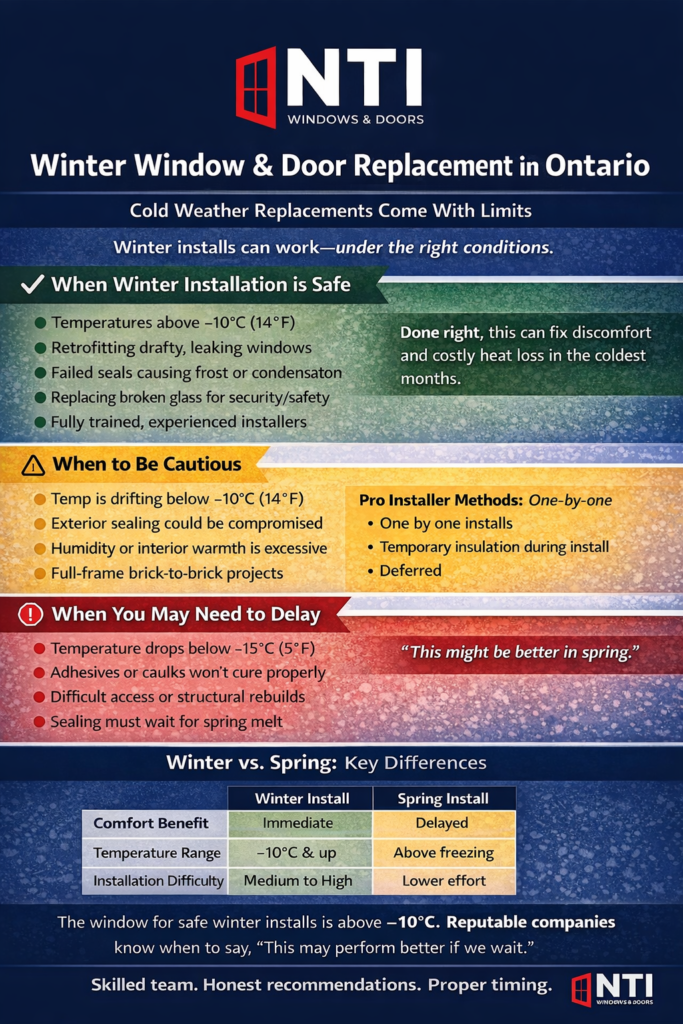
Most professional installs are viable above approximately −10°C
-
As temperatures approach −15°C and below, risks increase
-
Full-frame and brick-to-brick installs can still be done in winter—just not during extreme cold snaps
-
The best installers adjust scheduling based on weather, not the calendar
Why Winter Installations Get a Bad Reputation
Homeowners are right to ask questions. Winter introduces challenges such as:
-
Temporary heat loss during removal
-
Temperature-sensitive sealants and materials
-
Alignment and curing concerns during extreme cold
-
Increased risk if work is rushed or poorly staged
These aren’t myths—they’re realities when winter installs are done improperly.
The mistake is assuming winter itself is the problem.
In reality, uncontrolled temperature swings and poor judgment are the issue.
The Safe Temperature Window (This Is What Actually Matters)
Rather than focusing on seasons, professionals focus on temperature ranges.
✅ Generally Safe Conditions
-
Daytime temperatures above −10°C
-
Stable forecasts (not rapidly dropping overnight)
-
Proper staging and one-opening-at-a-time installation
-
Cold-rated materials and foams where required
Under these conditions, both retrofit and full-frame installations can be completed successfully.
When Extra Caution Is Required (But Work Can Still Proceed)
As temperatures approach the lower end of the workable range, additional planning becomes critical.
Situations that require extra care:
-
Full-frame or brick-to-brick replacements
-
Exterior sealing that may need staging
-
High interior humidity levels
-
Larger openings or doors requiring precise alignment
Professional crews mitigate risk by:
-
Installing one opening at a time
-
Using temporary insulation and air barriers
-
Scheduling work during the warmest part of the day
-
Planning exterior sealing strategically when needed
This is not about cutting corners—it’s about adapting technique.
When It’s Smarter to Pause (Short-Term)
There are moments when waiting briefly protects long-term performance.
You may want to delay if:
-
Temperatures drop below −15°C
-
Adhesives or sealants cannot cure properly
-
Structural or masonry work is involved during extreme cold
-
Conditions fluctuate rapidly with freeze-thaw cycles
In these cases, waiting a short period—sometimes just days or weeks—can result in a better outcome.
A reputable company will tell you:
“We can do this—but it will perform better if we wait for a warmer window.”
That’s judgment, not hesitation.
Winter vs. Spring: A Realistic Comparison
| Factor | Winter Installation | Spring Installation |
|---|---|---|
| Comfort Improvement | Immediate | Delayed |
| Scheduling Availability | High | Limited |
| Installation Complexity | Medium–High | Lower |
| Temperature Sensitivity | Managed | Minimal |
| Exterior Sealing | May be staged | Same-day |
| Decision Flexibility | Weather-dependent | Calendar-dependent |
There is no “better” season—only better timing.
The Bottom Line
Winter window and door replacement isn’t about pushing installs through cold weather.
It’s about:
-
Understanding temperature limits
-
Adjusting methods accordingly
-
Scheduling responsibly
-
And prioritizing long-term performance over short-term speed
When done correctly, winter installations can deliver immediate comfort, energy savings, and excellent results.
Not sure whether winter is the right time for your home?
A professional assessment can help determine if current conditions, temperature ranges, and installation type make sense — or if waiting briefly would be the smarter option.
We’ll confirm your install type (retrofit vs full-frame), review the forecast, and tell you whether to proceed now or wait for a better window.
If you’re still weighing timing, materials, or installation methods, our homeowner resource guides break down common questions in more detail.