A window quote can introduce a surprising amount of terminology. Sashes, spacers, Low-E glass, jamb extensions—each describes something different, but the names alone do not tell you what matters for your home.
At NTI Windows & Doors, we believe understanding your options is part of choosing them properly. You should know what you are buying, how it will be installed and who to contact if you need help afterward.
This guide explains the main parts of a window and connects them to the decisions homeowners make before replacement. We use a casement window as our main example; other window styles have different operating components.
What are the main parts of a window?
Most residential windows combine an outer frame, glass and the components that hold the glass in place. Operable windows also have moving parts, seals and hardware. Interior trim and the materials around the opening complete the installation, but they serve different purposes from the window itself.
The frame: head, jambs and sill
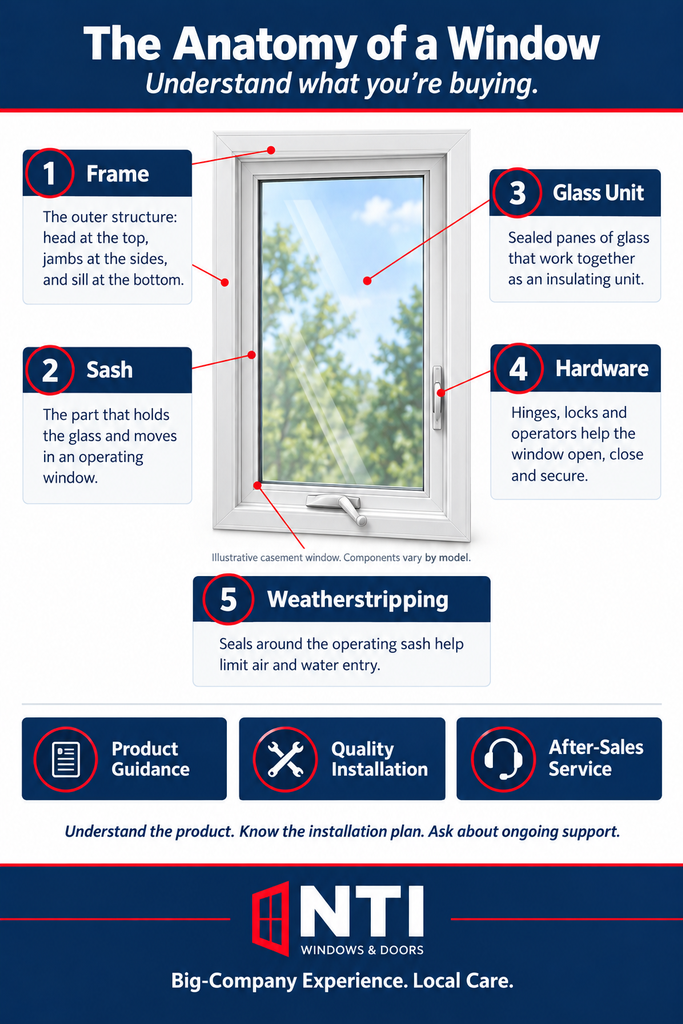
The frame is the outer structure of the window. Its top horizontal member is the head, its vertical sides are the jambs, and its bottom member is the sill.
Frame material and construction affect appearance, maintenance and performance. When comparing products, ask which frame system is quoted and how it will fit your opening. Two windows with similar exterior dimensions can have different frame profiles and visible glass areas.
Frame depth options at NTI. NTI offers 3.5-inch and 4.5-inch frame depths. Frame depth is the front-to-back dimension of the frame, not the width of the sash or the size of the glass. It is one part of selecting a window that suits the opening and installation plan. A deeper frame is not automatically the better choice for every home; ask how the proposed frame will work with your wall depth and interior and exterior finishes.
Interior and exterior colours. Your window does not have to have the same colour on both sides. NTI offers interior and exterior colour options, with available combinations depending on the selected product. We can help you coordinate the exterior with your home’s appearance and the interior with your rooms. Confirm the finish on each side before your order is finalized.
The sash
The sash is the assembly that holds the glass. On a casement window, it swings outward. On a hung window, the operating sash travels vertically; on a slider, it moves horizontally. Fixed windows do not open, and their construction may use a fixed sash or glass set directly into the frame.
Why does this matter? The style changes how you ventilate the room, reach the glass for cleaning and use the space around the window. Consider everyday access, not just the appearance in a catalogue.
The insulated glass unit
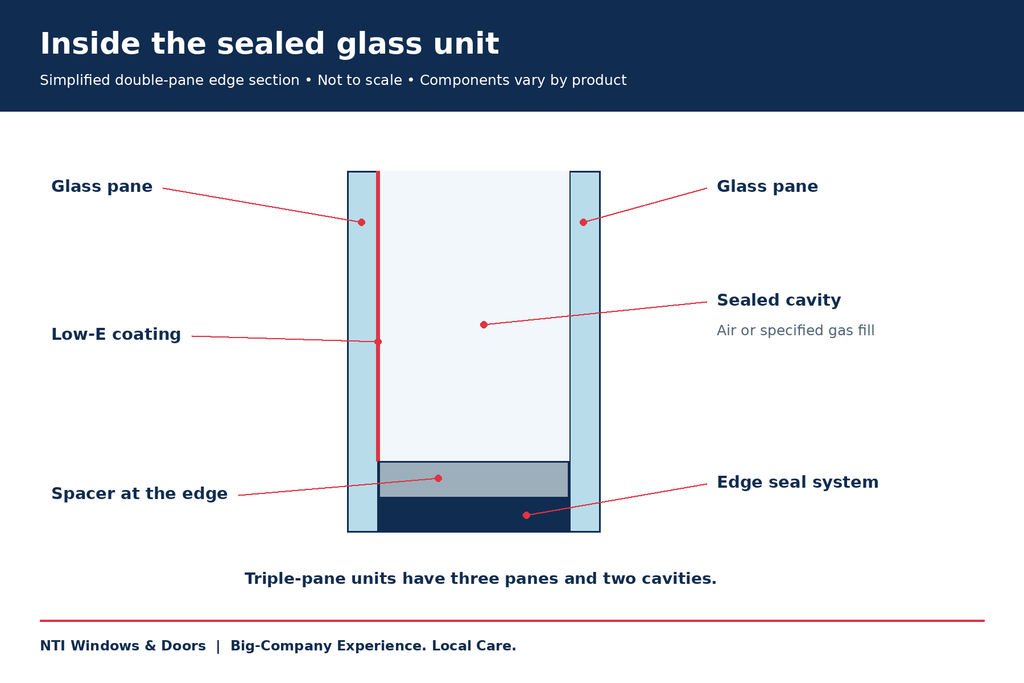
The insulated glass unit, often called an IGU or sealed unit, contains two or more panes separated by sealed cavities. Double-pane units have two panes; triple-pane units have three.
The complete glass specification matters. Low-emissivity, or Low-E, coatings reduce radiant heat transfer. Gas fills such as argon can improve insulation compared with air. Spacers maintain the separation between panes, and the perimeter seal system helps keep the unit sealed. Spacer design also influences heat transfer at the glass edge.
Ask what glass package is included and whether the performance information describes the complete window or the glass alone. A pane count or a coating name is not the whole specification. The right discussion considers the room, sun exposure, comfort goals and budget together.
Glass options at NTI. NTI offers double- and triple-pane glass packages, with a range of Low-E coating options and LoĒ-i89 available in compatible configurations. These are choices to discuss together, rather than a checklist of upgrades every home needs. Tell us about the room’s sun exposure, comfort concerns and budget so we can explain the available packages and the performance of the window being quoted.
Weatherstripping and operating hardware
Weatherstripping helps seal the contact between an operating sash and its frame. Hinges, operators, locks, rollers or balances allow the window to function, depending on the style. On a typical crank-operated casement, the operator opens the sash and the locking hardware secures it closed.
During a consultation, ask to see how the window opens and locks. Think about reaching over a kitchen counter, operating a large sash or cleaning an upper-floor window. Hardware should suit the way you will actually use the room.
The aNTI-Theft lock. NTI’s aNTI-Theft lock is part of the security conversation when reviewing your window options. Ask us to demonstrate the locking arrangement on the product being quoted and confirm which features are included. Understanding how to close and lock the window properly is as important as recognizing the hardware’s name.
Double weatherstripping. NTI offers windows with double weatherstripping, providing two sealing barriers around the operating sash to help limit air and water entry when the window is properly closed. Confirm the sealing arrangement for your chosen window style. The complete window design, adjustment and installation also matter to its performance.
Screens and grilles
Insect screens allow ventilation while helping keep insects out. They are not fall-prevention barriers. Grilles create a decorative divided-light appearance; their location and construction vary by product.
Confirm what is included. Screen arrangement, grille pattern and cleaning access are details worth settling before production, rather than discovering after installation.
Where the window ends and the installation begins
A finished opening includes more than the manufactured window. Understanding the surrounding components makes it easier to compare installation proposals.
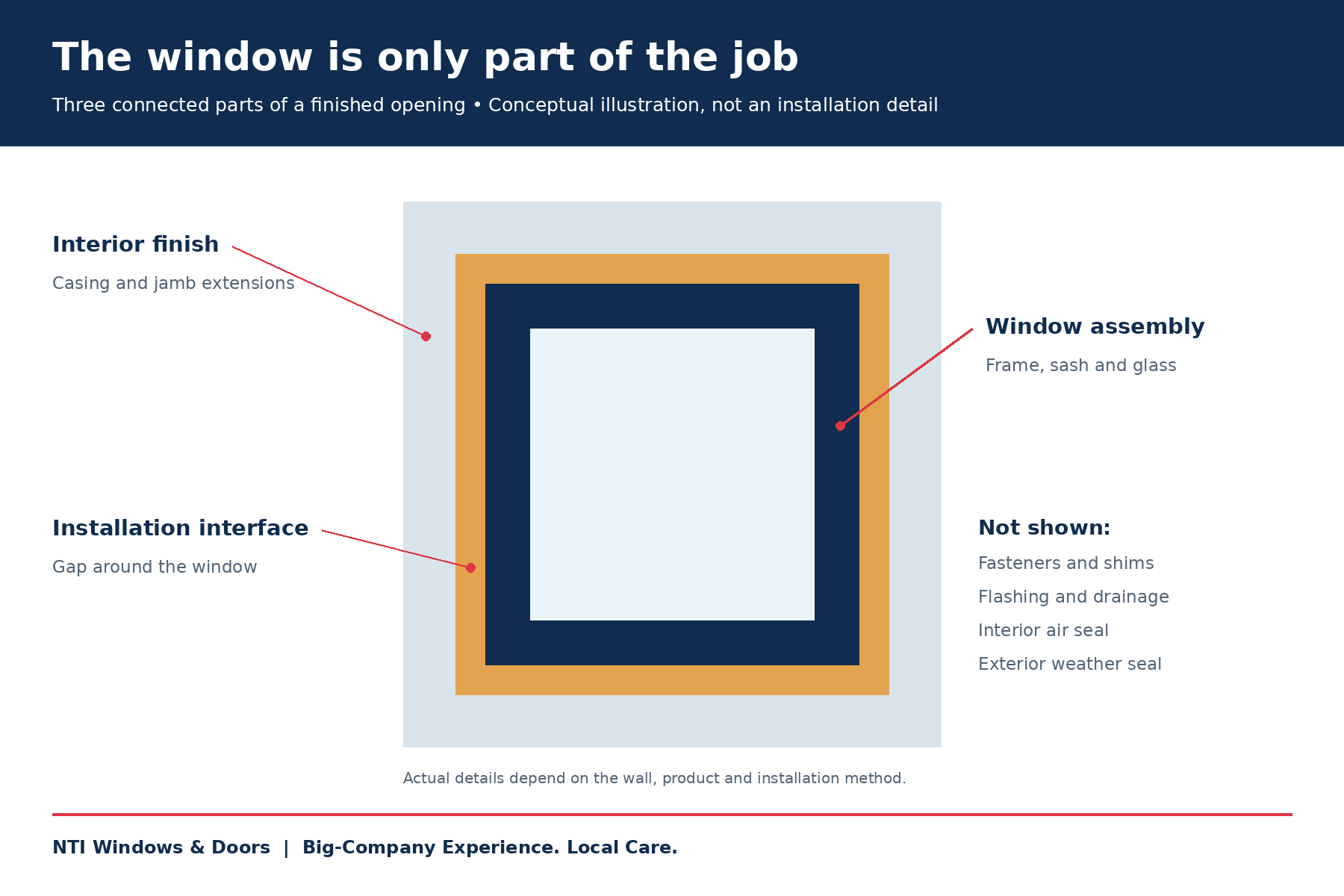
Jamb extensions bridge the depth between the window frame and the interior wall finish. Interior casing covers the joint around the opening. Exterior capping is formed cladding used to cover suitable exterior surfaces; it is not a substitute for repairing a deteriorated opening or addressing water entry.
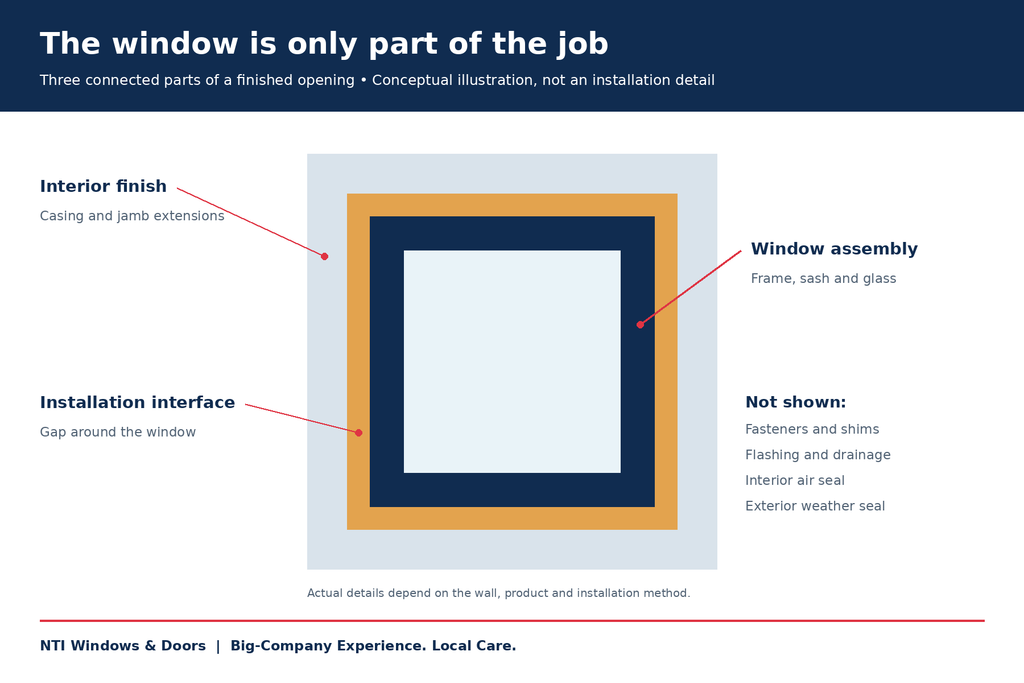
Behind the finish, the window must be supported, positioned and secured appropriately. The gap around it needs an insulation and air-sealing approach suited to the assembly. Flashing, drainage and exterior sealing must work with the wall and the product’s installation requirements.
These details are not all visible once the trim is on. That is why the installation scope deserves the same attention as the window specification. At NTI, our approach is to explain both: the product you have selected and the work involved in fitting it to your home.
Which parts stay during retrofit or full-frame replacement?
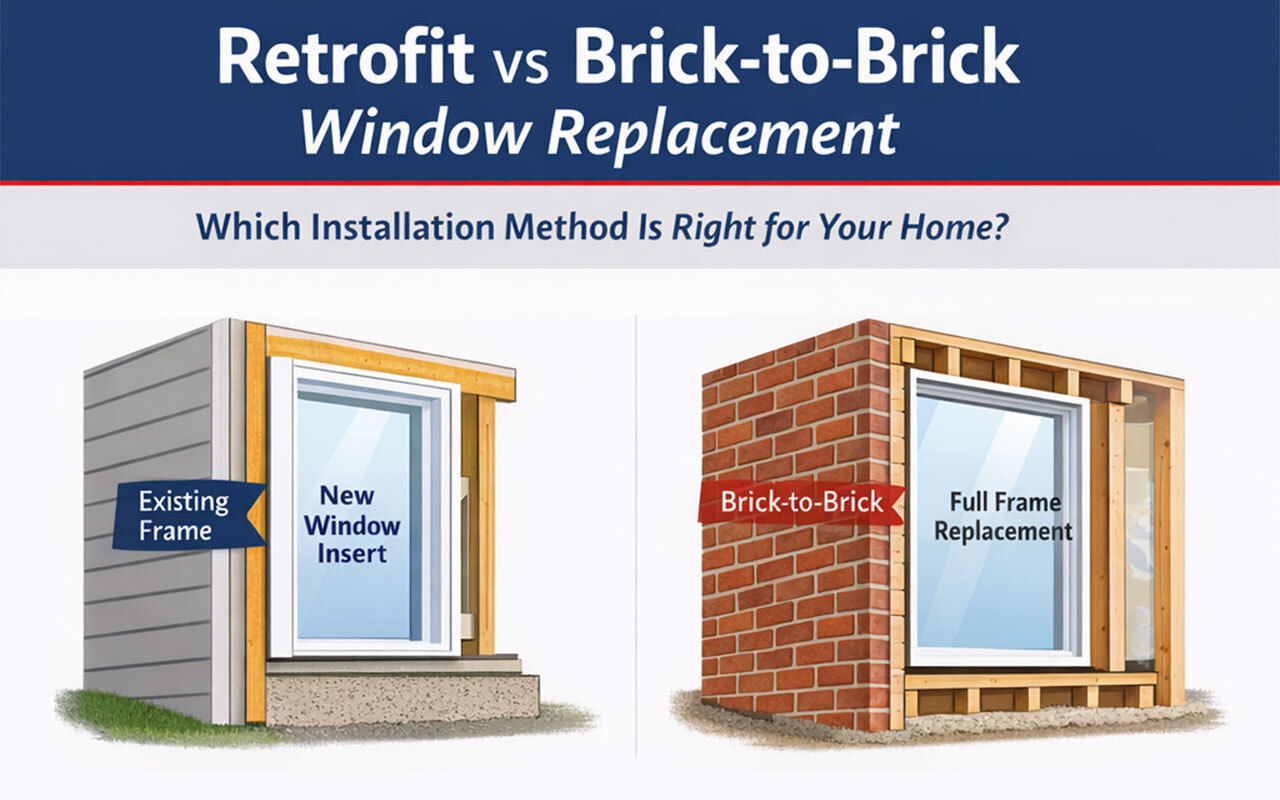
A retrofit installation generally fits a replacement unit within a retained existing frame. Full-frame replacement removes the existing window frame so the opening can be assessed and prepared for the new unit. The exact work depends on the home and the agreed scope.
That difference affects more than the installation day. It can influence visible glass area, interior and exterior finishes, and access to underlying conditions.
Ask your installer to identify exactly what will stay, what will be removed and what new finishing is included. For a closer comparison, read our guide, “Retrofit vs Brick-to-Brick Window Replacement: Which Installation Method Is Right for Your Home?”
What should you look for when comparing windows?
Use what you have learned to ask specific questions. A useful quote discussion should establish:
- Which window style, frame system and glass package are included?
- What screens, locks, handles and grille options are specified?
- What installation method is proposed, and why does it suit the opening?
- What interior and exterior finishing is included?
- How will unexpected conditions be discussed if they are discovered?
- What warranty coverage applies, and who handles service requests?
The aim is to compare the actual scope. If one quote includes different glass, finishing or installation work, the totals alone will not explain the difference.
An in-home consultation gives us an opportunity to connect those choices to your home. Our team brings experience from across the industry, paired with the direct communication and attention of a local company.
What happens if a part needs adjustment or service?
Knowing the parts helps you describe an issue clearly. “The sash rubs at the bottom when I close it” is more useful than “the window does not work.” A photograph of the complete window, followed by a close-up of the affected area, can also help the service team understand the concern.
If you are an existing NTI client, contact us through our service request route with your project details and a description of what is happening. We can review the concern and explain the next step. Coverage depends on the applicable warranty terms and the nature of the issue.
After-sales support belongs in the buying conversation from the beginning. Ask how to request help and who will coordinate it—not only how long the warranty lasts.
Common questions about window parts
Is the sash the same as the frame?
No. The frame is the outer structure. The sash holds the glass and, on an operable window, is the portion that moves. Some fixed windows are built differently, so the exact components depend on the design.
Is the interior ledge the window sill?
Homeowners often call the interior ledge a sill. In window terminology, the sill is the bottom member of the frame; a projecting interior finish piece is often called a stool. Using a photo avoids confusion when discussing trim or service.
Does condensation mean the glass unit has failed?
Not necessarily. Moisture on a room-side or exterior glass surface is different from moisture trapped between the panes. Persistent fogging between panes can indicate a sealed-unit problem and should be assessed. Describe where the moisture appears rather than assuming every case needs a replacement window.
Does every window have the same parts?
No. Casement, awning, hung, sliding and fixed windows have different operating arrangements. Use an anatomy guide to learn the terms, then confirm the components of the actual product being quoted.
Clear guidance before you order
You do not need to become a window expert to make a good decision. You do deserve an explanation you can follow, a clear scope of work and a team that remains available after installation.
If you are planning replacement windows in Southern Ontario, request a free in-home consultation with NTI Windows & Doors. We will walk through your options, explain the installation approach and help you understand what is included.
Big-Company Experience. Local Care.